

Capability Networks

Human Factors Managers Group

A forum for rail industry Human Factors Managers to develop and communicate common perspectives on technical priorities, standards and research that drives safety and performance across the Australian rail industry.

ARISO Rail Human Factors Forum 2026

The Rail Human Factors Forum brings together rail professionals to explore how human factors thinking and systems approaches can improve safety, performance and innovation across the industry.

Rail systems are becoming increasingly complex as new technologies are introduced across operations, infrastructure and rolling stock. In this complexity, human factors plays a critical role helping organisations design safer and more effective rail environments.

The Forum aims to raise awareness of this critical value that human factors brings to the rail industry and provide a platform for professionals to share insights, experiences and ideas.


Register now

2026 Speakers

2026 Speakers

ARISO Rail Human Factors Forum — Human Factors and Emerging Technology

Facilitator
Fiona Kenvyn

Fiona Kenvyn

Metro Trains Melbourne

Fiona is a human factors professional with 21 years of experience in applied rail human factors, both within Australia and the UK. Currently leading HF at Metro Trains Melbourne, she has provided technical HF expertise to rail projects at all levels of complexity, and driven strategy and process at both organisation and industry level for effective, value-added HF integration. She has an active role across the rail industry, including through the ARISO HF Managers Group and HFESA’s Transport Special Interest Group, and she is part of the editorial group for the international RailHOF online platform. Her current role has seen her develop, assure and govern the processes for human factors integration, fatigue risk management and the management of change at Metro Trains. She is passionate about raising awareness of HF across the rail industry and encouraging the integration of HF and systems thinking to centre the people at the heart of the rail system.

Keynote Address
Professor Paul Salmon

Professor Paul Salmon

University of the Sunshine Coast

Paul is a professor of Human Factors and creator of the Centre for Human Factors and Systems Science at the University of the Sunshine Coast. He has 25 years’ experience of applied Human Factors and systems science research in a diverse set of domains. His current research interests are focused on the application of systems science to manage societal and global level risks such as artificial intelligence. Paul has received several prestigious awards from the International, Australian, US, and UK Human Factors and Ergonomics societies, and between 2020 and 2025 The Australian has identified him as Australia’s field leader in the area of quality and reliability.


Presentation 1
Professor Gemma Read

Professor Gemma Read

University of the Sunshine Coast

Gemma is a Professor of Psychology and the Director of the Centre for Human Factors and Systems Science at the University of the Sunshine Coast, Queensland. Gemma has over 19 years’ experience applying human factors and systems thinking methods and approaches to optimise safety and performance in complex systems, including transportation, healthcare, defence and construction. Prior to joining academia, she worked in transport safety regulation in Victoria.


Presentation 1
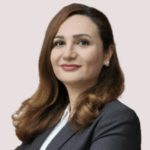
Zohre Abedi

Zohre Abedi

University of the Sunshine Coast

Zohre is a Research Fellow at the Centre for Human Factors and Systems Science, University of the Sunshine Coast. She has over 10 years’ experience integrating Human Factors and Ergonomics across transport and healthcare-related projects using a systems approach. Her research delivers practical solutions to real-world challenges, with a focus on innovative technologies such as AI.


Presentation 2
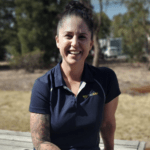
Corrie Summers

Corrie Summers

TasRail

Corrie Summers is a well-known Tasmanian safety professional and risk practitioner, with a career spanning over 20 years in various industries including timber manufacturing, civil construction and more recently, rail. In recent times, Corrie has become the subject matter expert within TasRail regarding Human Factors, having led the Human Factors assurance activities on several key projects, as well as implement reactive loss of control identification processes into TasRail’s incident management framework. Corrie holds qualifications in Advanced Human Factors Fundamentals and has most recently integrated error producing condition and error type identification within the TasRail Safety Management System. Corrie has dedicated her career to safety improvement, and believes that there is much that can be learned by analysing incidents within complex systems and industries. Corrie has undertaken hundreds of incident investigations and has assisted in many more investigative processes throughout her employment, where human factors have been a contributor. Corrie is presenting a real-life case study on what happens when technology fails its users, and the importance of anticipating the natural human responses in normal and abnormal situations.

Presentation 3
Jan Asmussen

Jan Asmussen

SYSTRA ANZ

Jan is a Senior Human Factors Consultant at SYSTRA ANZ with over nine years of experience in the rail industry. He began his career in the United Kingdom, where he supported a range of programmes, notably contributing to operational testing of ETCS Level 2 for the Danish Signalling Programme. Since relocating to Australia in 2018, Jan has been involved in high-profile and technically complex initiatives, including Transport for NSW’s ETCS Level 2 Digital Systems Program and Sydney Trains’ Remote Switching System project. His portfolio spans numerous train control and signalling projects across Australia, where he applies deep human factors expertise to enhance system usability, operational performance, and safety in complex rail environments.


Presentation 3
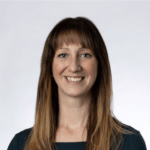
Kate Moncrieff

Kate Moncrieff

SYSTRA ANZ

Kate is Director Human Factors and is currently leading the NSW Systems Engineering and Integration Team at SYSTRA ANZ. She has over 18 years’ Human Factors experience in rail and is a Chartered Member of the CIEHF and a CPE with HFESA. Kate is experienced in successfully integrating Human Factors across complex projects and has worked at every stage of the project lifecycle from concept to completion. She has extensive experience of managing HF delivery, technical integration, and assurance. Responsible for the early definition of HF scope, managing the HF resources and providing assurance of the quality and compliance of all deliverables produced.


Presentation 4
Maria Appel

Maria Appel

Metro Trains Melbourne

Maria is a Chartered Human Factors Specialist (CIEHF) with over 13 years of experience across safety-critical sectors including aviation, defence, and rail. She holds a Masters in Human Factors and Systems from Embry-Riddle Aeronautical University and is currently the Human Factors Integration and Change Lead at Metro Trains Melbourne. Her work focuses on integrating HF into operational risk, engineering, and organisational change. She has contributed to major aviation and rail programs, developed strategic HF guidance, and worked closely with various operations and maintenance teams to support safe, effective decision-making in high-pressure environments.


Presentation 5
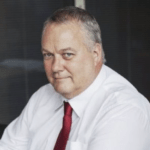
Colin Kerr

Colin Kerr

IHF Digital

Colin is a highly experienced transport and engineering professional with more than four and a half decades of cross-discipline engineering experience, including over twenty years in the rail and light rail sector. He has dedicated much of his career to supporting the delivery of safe, integrated, and sustainable public transport systems in Edinburgh and across the United Kingdom. Throughout his career, Colin has contributed to the development of numerous industry guidance documents and best-practice standards. His work has helped strengthen safety governance and operational practices across the UK tramway industry. He has recently accepted the role of Chair of the Light Rail Standards Committee, the new body responsible for agreeing on formal sector-wide standards & guidance in the UK. Colin has also supported innovation in the transport sector, collaborating with universities and industry partners on projects such as energy-efficient tram systems, fatigue monitoring technology for transport workers, and regenerative energy capture from tram braking systems. Colin is widely recognised for his contributions to safety and major project delivery. In 2023 he received the Lifetime Achievement Award at the Global Light Rail Awards, recognising his long-standing impact on the international light rail community.


2026 Program

ARISO Rail Human Factors Forum — Human Factors and Emerging Technology

Thursday 16 April 2026  ·  1:00pm – 4:50pm (AEST)  ·  Presented by the ARISO Rail Industry Human Factors Managers Group

The Forum will be divided into three sections with 10-minute breaks. Each presentation will run for approximately 30 minutes, including 5 minutes for Q&A.

Opening
1:00pm Welcome, Acknowledgement of Country Fiona Kenvyn, Metro Trains Melbourne
1:05pm Introduction and welcome from ARISO Alan Fedda, ARISO CEO
1:15pm General introduction and housekeeping Fiona Kenvyn, Metro Trains Melbourne
Session one
1:20pm KeynoteMind the algorithm: Human Factors and AI safety in rail (35 mins) Prof Paul Salmon, University of Sunshine Coast
1:55pm Presentation 1Human Factors at the Heart of Level Crossing Innovation: Introducing a new HFI Toolkit (25 mins + 5 mins Qs) Gemma Read and Zohre Abedi, University of Sunshine Coast
2:25pm Break10 minutes
Session two
2:35pm Presentation 2When Tech Goes Rogue — Remote Control Runaway case study (25 mins + 5 mins Qs) Corrie Summers, TasRail
3:05pm Presentation 3Celebrating the use of old tools for new challenges! — V/Line Shepparton Train Control System HMI case study (25 mins + 5 mins Qs) Jan Asmussen and Kate Moncrieff, Systra ANZ
3:35pm Break10 minutes
Session three
3:45pm Presentation 4Technology Change: Why Human Factors Makes the Difference (25 mins + 5 mins Qs) Maria Appel, Metro Trains Melbourne
4:15pm Presentation 5Fatigue Risk Mitigation with BaselineNC™ (Light Rail Case Study) (25 mins + 5 mins Qs) Colin Kerr and Andrew Grant, IHF Digital
Close
4:45pm Wrap up, survey link for feedback Fiona Kenvyn, Metro Trains Melbourne
4:50pm Close
5:30pm Local post-workshop networking events — refer below for details per State HF Managers Group Representatives

Post-forum networking events — 5:30pm
NSW Edinburgh Castle Hotel, 294 Pitt St Sydney (adjacent to Gadigal Sydney Metro station) — Table booked in the Eddy Main Bar Organiser: Tara Kazi (Sydney Metro)
VIC Past/Port Rooftop (above Waterside Hotel), 508 Flinders Street Melbourne Organiser: Fiona Kenvyn (Metro Trains)
TAS Venue TBC Organiser: Corrie Summers (TasRail)
WA Venue TBC Organiser: Rachael Smart (PTA WA)
QLD Sixteen Antlers Rooftop Bar, Brisbane (opp City Hall) Organiser: Antony Whitmore (QR)

Human Factors and Emerging Technology
As innovation accelerates across the rail network — from digital systems to automation and new onboard technologies — the human element has never been more critical.

This Forum will dive into why innovation succeeds only when technology works for the people who operate, maintain and interact with it. It will explore why user-centred design is critical, and how human factors thinking and systems approaches are being applied to emerging and innovative technologies in rail. You’ll also hear about new and evolving ways human factors analysis tools are being designed and used in a rail context.

The 2026 Forum aims to raise understanding of the contribution human factors and systems thinking make to the rail industry, and to foster the exchange of skills and knowledge among rail project professionals who apply — or should apply — HF in their work.

OVERVIEW

ARISO Human Factors Managers Group

ARISO provides national coordination for the Human Factors Managers Group, facilitating discussions around human risks and opportunities that contribute to a safe (SFAIRP) rail environment.

Participation

  • At least two meetings per year
  • Open to accredited rail transport operators
  • Includes rail infrastructure managers

Contact the team

Focus areas

The group supports consistent, practical approaches to Human Factors across the rail system through leadership, shared methods, and national alignment.

Leadership

Provide leadership in the industry in relation to the continuous improvement of Human Factors as a key discipline that contributes to safety and performance.

Technical methods

Maintain a watching brief on new Human Factors technical methods in order to promote improved approaches.

Research

Identification of common research priorities to assist in directing research providers towards highest impact areas at a national level.

Guidance

Identification and initial assessment of international rail guidance and standards for promotion.

Standards

Identification of gaps in current standards provision for consideration during ARISO priority review.

Continuous professional development

Identification of requirements for the Continuing Professional Development of Human Factors Specialists in the rail industry.

Public transport users

Promote the value of Human Factors in the design of systems and infrastructure that improve the experience of public transport users whilst supporting system performance improvement in areas such as wayfinding, passenger flow, and information systems.

GET INVOLVED

Join the Human Factors Managers Group

Membership is open to all accredited rail transport operators, including rail infrastructure managers.